


High-Rise vs. Low-Rise Office Buildings:
Comparing Your Rental Options
High-rise office buildings in the Singapore Central Business District (CBD) remain in huge demand despite high rents – CBRE Research shows vacancy rates in the Core CBD (Grade A) have steadily tightened from 5.9% in Q1 2025 to 5.1% in Q3 2025[1]. According to the data, this translates to nearly 95% occupancy for high-rise office buildings in Singapore’s CBD.
Looking at these numbers in the high-rise office rent context, it is apparent that businesses are willing to pay a premium for high-rise office buildings. For those who are still weighing the decision between renting a high-rise or low-rise office building, here is a detailed comparison of the differences between them.
WHAT IS CONSIDEREDHIGH-RISE VS. LOW-RISEFOR AN OFFICE BUILDING?
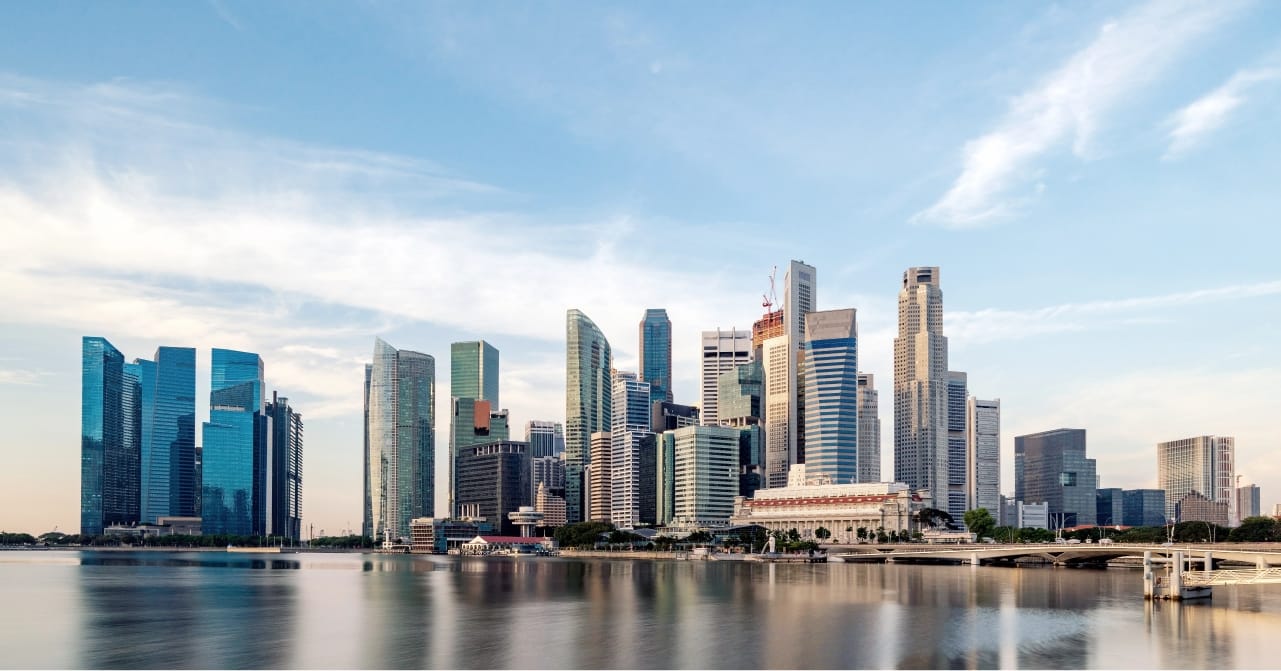
High-rise office buildings across Singapore have at least 15 stories above street level, and are usually located in prominent business districts, such as Raffles Place, Marina Bay, etc.
Office buildings in the CBD are considerably taller than commercial buildings in other areas, with most exceeding 30 stories and are divided into high and low zones. In contrast, low-rise office buildings typically have fewer than 15 stories and tend to have smaller floor plans.
 Artist’s Impression
COMPARING
HIGH-RISE VS.LOW-RISE OFFICES FOR RENT

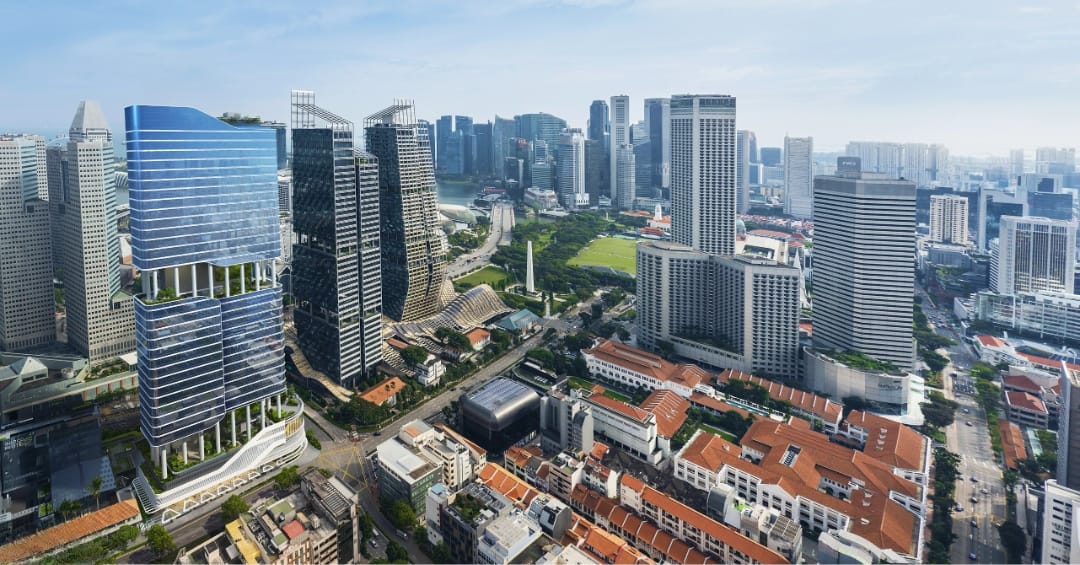
High-rise office buildings are architecturally designed to have wider and deeper foundations, given their taller height. With broader foundations, high-rise office buildings are generally able to offer larger floor plates for rent. For example, Grade A office buildings like Shaw Tower have typical office floor plate sizes ranging between 18,000 and 20,000 sq ft.
Floor plate sizes for low-rise office buildings in Singapore are typically smaller, and landlords of such buildings typically are able to subdivide their floor plates into many smaller units, often ranging between 2,000 and 8,000 sq ft to match tenant profiles and requirements.
High-rise office buildings also commonly feature column-free floor plates and floor-to-floor knockout panels to improve mobility within floors and accommodate businesses with larger space requirements.

In 2019, a study published in the Building and Environment journal recorded that access to window views and daylight in the office led to improvements in cognitive performance and reduced eye-strain for workers[2].
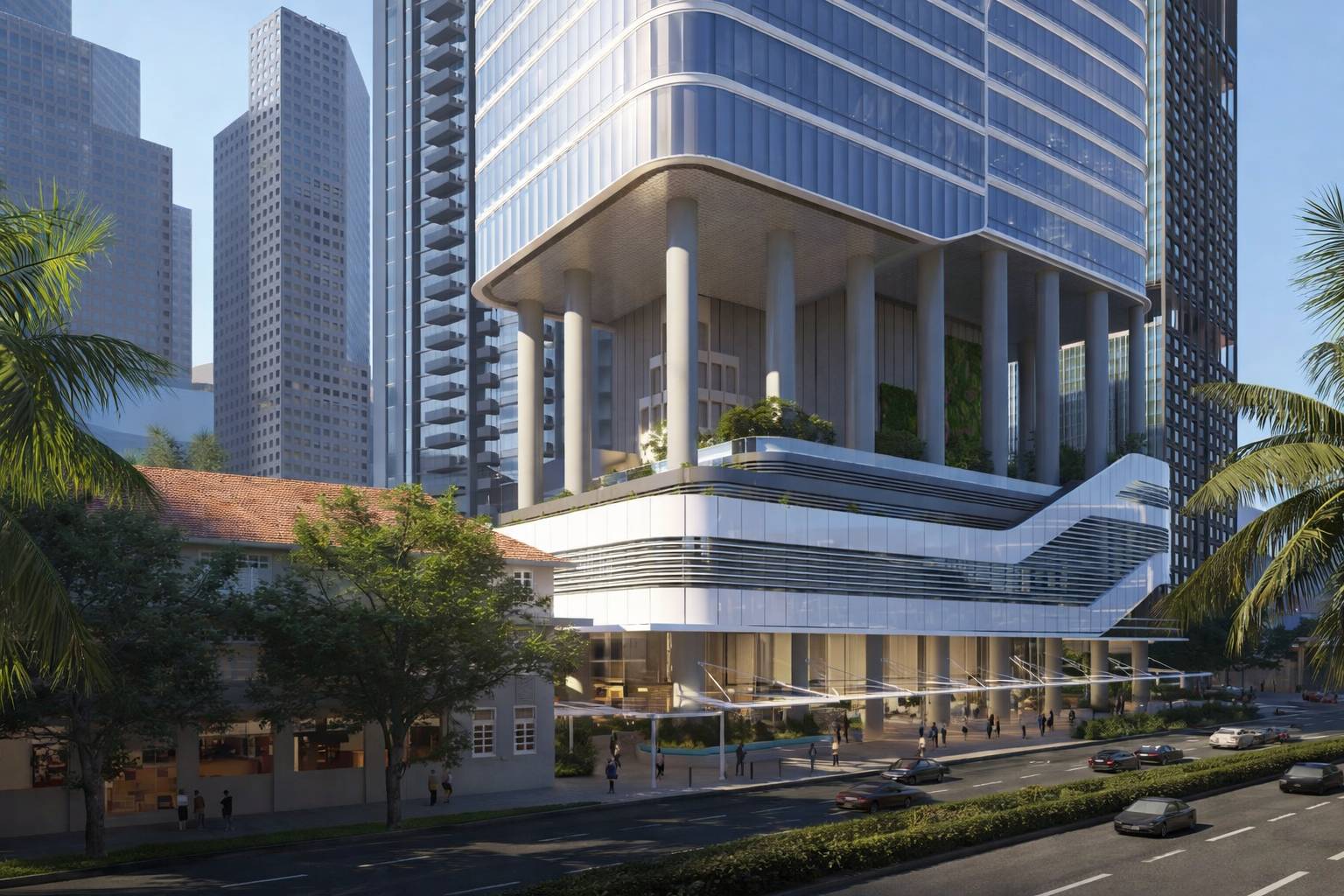
Shaw Tower’s floor to ceiling glass façade and side core configuration is a good example – allowing for open-plan office designs with panoramic views of the city across its floors, while allowing natural daylight on top of design efficiencies on the floor plate. In addition, Shaw Tower also has sky terraces and landscaped rooftops that provide a relaxing outdoor space for occupants to unwind and recharge.
Office spaces in low rise buildings, depending on its locality may be susceptible to taller neighbouring buildings, hence potentially causing workplace environments to feel confined and claustrophobic.

High-rise buildings with Grade A office spaces are equipped with a range of amenities that enhance the tenant experience.
For example, Shaw Tower has a gym, bicycle parking and end-of-trip facilities, dedicated concierge services, touchless access controls, smart lighting systems, and HVAC optimisation for indoor air quality.

High-rise buildings have always commanded a premium over low-rise buildings, but the gap in office rental prices has been widening.
According to Q4 2024 data from the Urban Redevelopment Authority (URA), median office rents for Category 1 (Grade A) offices, including high-rise buildings in the CBD, remained consistent at S$12.52 per square foot (psf) per month. In the same report, the median rental for Category 2 office spaces in Singapore, such as those in low-rise buildings, fell 3.2% quarter-onquarter to S$6.35 psf per month[3].
This expanding gap suggests that demand for office rentals in high-rise buildings is on the rise. With Singapore being one of the most competitive markets across the world, the need for businesses to position themselves prominently in their industry is more important than ever.

The global conversation around the environment has made sustainability a key part of every business strategy. A growing number of high-rise office buildings are now incorporating sustainability features such as energy-efficient HVAC and sources of renewable energy generation for a lower carbon footprint. Shaw Tower is the first Grade A office building in Singapore to achieve the BCA Green Mark Platinum (Super Low Energy) rating under the latest 2021 criteria, with at least 60% in energy savings compared to the baseline for commercial buildings. These energy savings lower operating expenses for tenants and support corporate sustainability goals. Shaw Tower’s design has also achieved WiredScore and SmartScore certification, indicating a high level of efficiency across operations, network and infrastructure, and technological innovation. Low-rise office buildings tend to lack sustainability features and have limited layout sizes that are not compatible with future expansion.
 Artist’s Impression
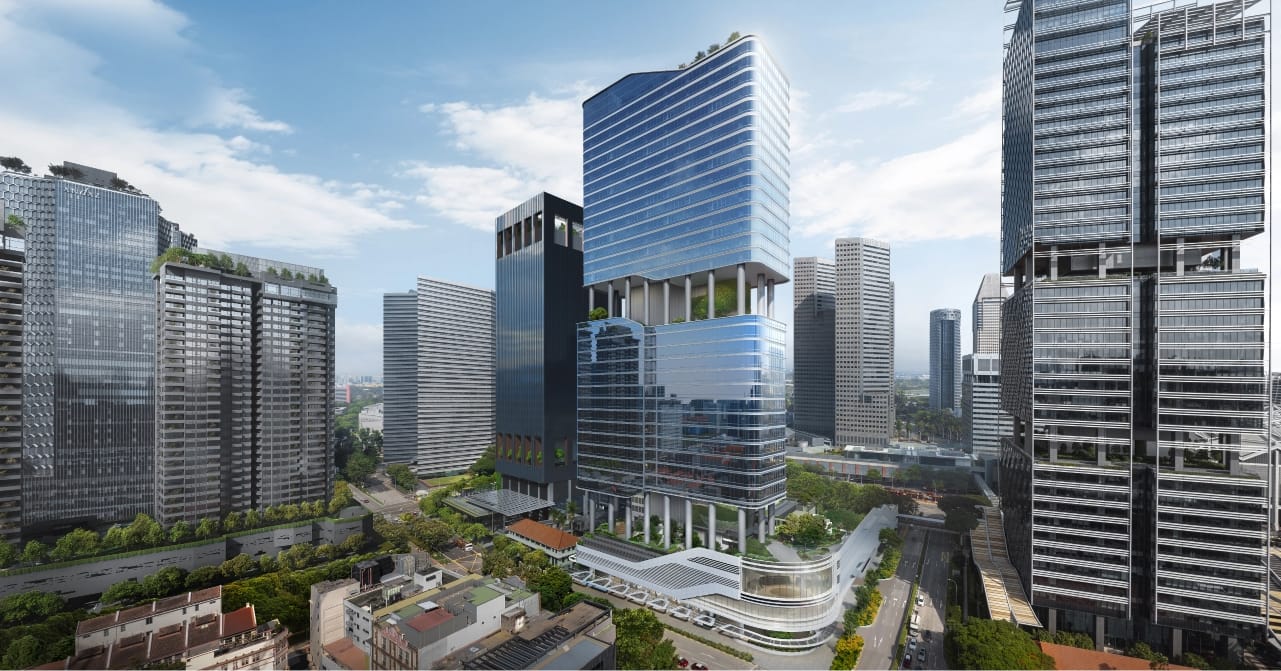
Shaw Tower stands out as a Grade A office building in the CBD, offering 23 levels dedicated to office use, split between high and low zones. With landscaped terraces, end-of-trip facilities, and smart building systems that support productivity and future expansion, businesses will be well-positioned as major players in their industry.
- Singapore’s office market seeing the beginning of a bull run. (13 October 2025). CBRE Singapore. https://www.cbre.com.sg/press-releases/singapore-office-market-seeing-the-beginning-of-a-bull-run
- Jamrozik, A., Clements, N., Hasan, S. S., Zhao, J., Zhang, R., Campanella, C., Loftness, V., Porter, P., Ly, S., Wang, S., & Bauer, B. (2019). Access to daylight and view in an office improves cognitive performance and satisfaction and reduces eyestrain: A controlled crossover study. Building and Environment, 165, 106379. https://doi.org/10.1016/j.buildenv.2019.106379
- Rashiwala, K. (24 January 2025). Bifurcation of Singapore office market widens on the back of flight to quality by tenants. The Business Times. https://www.businesstimes.com.sg/property/commercial-industrial/bifurcation-singapore-office-market-widens-back-flight-quality-tenants