
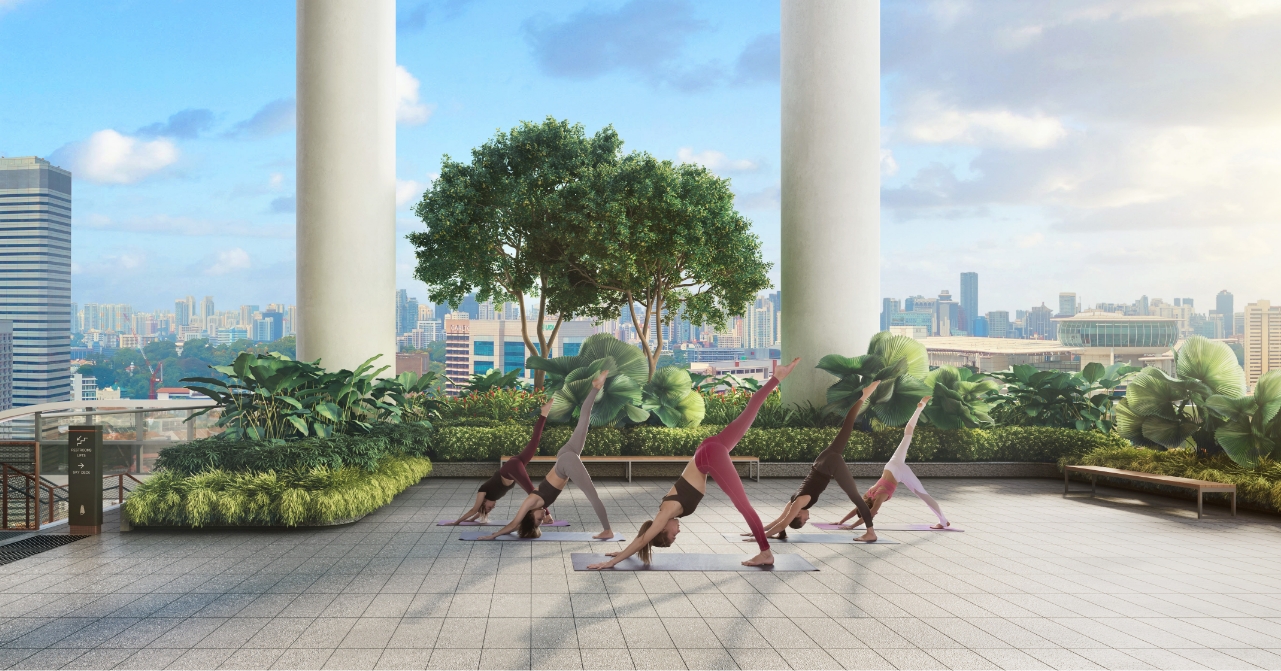


The Impact of Workplace Wellness in Singapore
Workplace wellness is increasingly coming into focus for businesses in Singapore. While the majority of internal commercial decisions are often made in line with tangible markers like cost overheads and profits, the data shows that workplace wellness plays a direct role in employee health, focus, productivity, and ultimately, retention.
So, how does one measure workplace wellness against traditional performance data and KPIs? There are a wide range of factors that affect employee wellbeing, it’s not hard to see why business decision makers default to the data that is readily available, rather than concepts.
However, businesses looking to go one step further in optimising operations, workplace wellness can be the final key in unlocking major milestones in productivity, retention, and employee engagement, that performance KPIs alone cannot match.
This article covers what workplace wellness is, how the office environment affects wellness, and how thoughtful building design can support a more engaged, productive workforce.
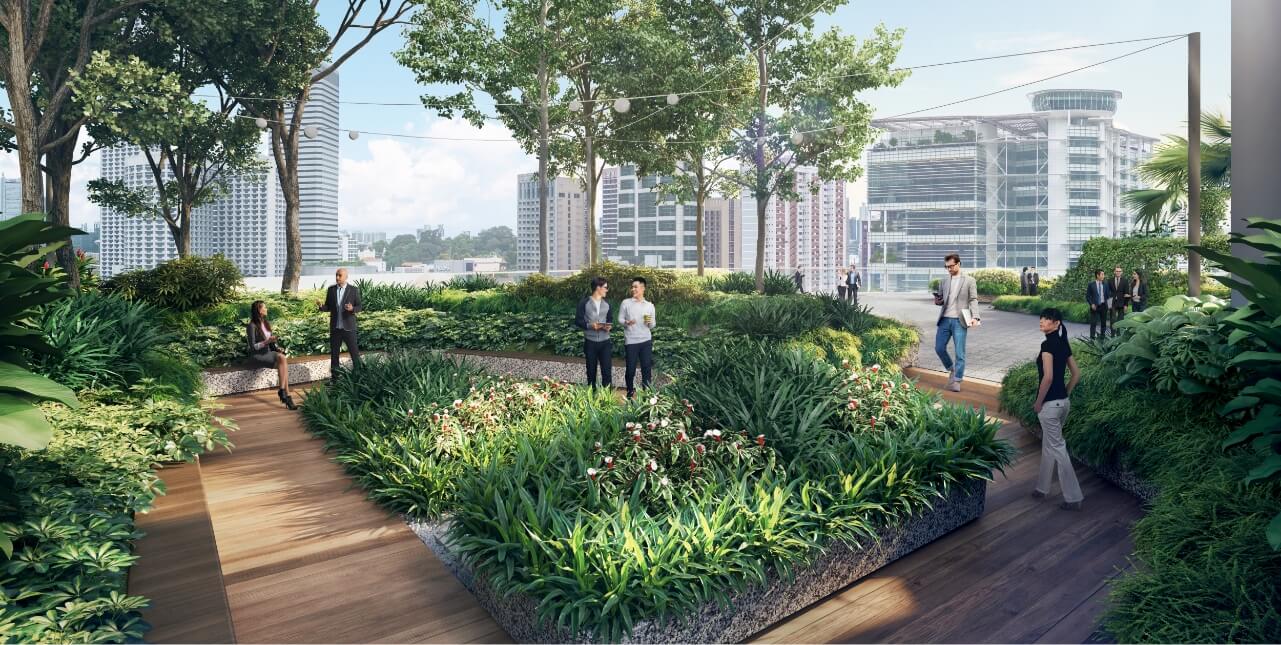 Artist’s Impression
WHAT IS WORKPLACE WELLNESS?
Workplace wellness is a term that refers to the practices, policies, and environmental factors that support the physical, mental, and emotional health of internal employees.
The case for investing in workplace wellness is well established by research. When workplace wellness is a priority well, employees are more productive, take fewer sick days, and report higher satisfaction within the role.
Most businesses are familiar with workplace wellness initiatives like employee perks, wellness workshops, and corporate away days – but few attribute workplace wellness with the physical office environment.
HOW THE OFFICE ENVIRONMENT PROMOTES WORKPLACE WELLNESS
The physical office environment is one of the most significant and underestimated factors for workplace wellness. With employees spending the majority of their working hours in the office, the quality of the office space has a direct and measurable bearing on how they feel and perform.
NATURAL LIGHT AND
VIEWS OF NATURE
Natural light is highly favoured in home designs, and for good reason – access to daylight and greenery helps make a space feel less confined and comfortable to be in for long hours.
A 2014 study on the psychological effects of greenery and light in office spaces found that these elements improved concentration, productivity, and workplace satisfaction[2]. The study also found the converse to be true – a lack of nature contact and window views is linked to higher stress.

INDOOR AIR QUALITY
Poor indoor air quality directly impacts health and productivity, contributing to headaches, poor concentration, reduced cognitive function, and fatigue.
A controlled Harvard study found that cognitive function scores were significantly higher in simulated “green,” well-ventilated office conditions than in conventional ones[1], indicating that better ventilation and lower pollutant levels improve cognitive performance.
This is why Grade A office buildings like Shaw Tower are equipped with advanced HVAC systems to provide fresh filtered air through the building.
HOW SHAW TOWER’S BUILDING FEATURES PROMOTE WORKPLACE WELLNESS
Shaw Tower is a clear example of a Grade A office building that puts these principles into practice, integrating features that serve both sustainability and employee wellbeing. Shaw Tower exemplifies itself as a highly sustainable building through its certifications of Green Mark Platinum (Super Low Energy) and targeted WELL v2 Core Gold certification.
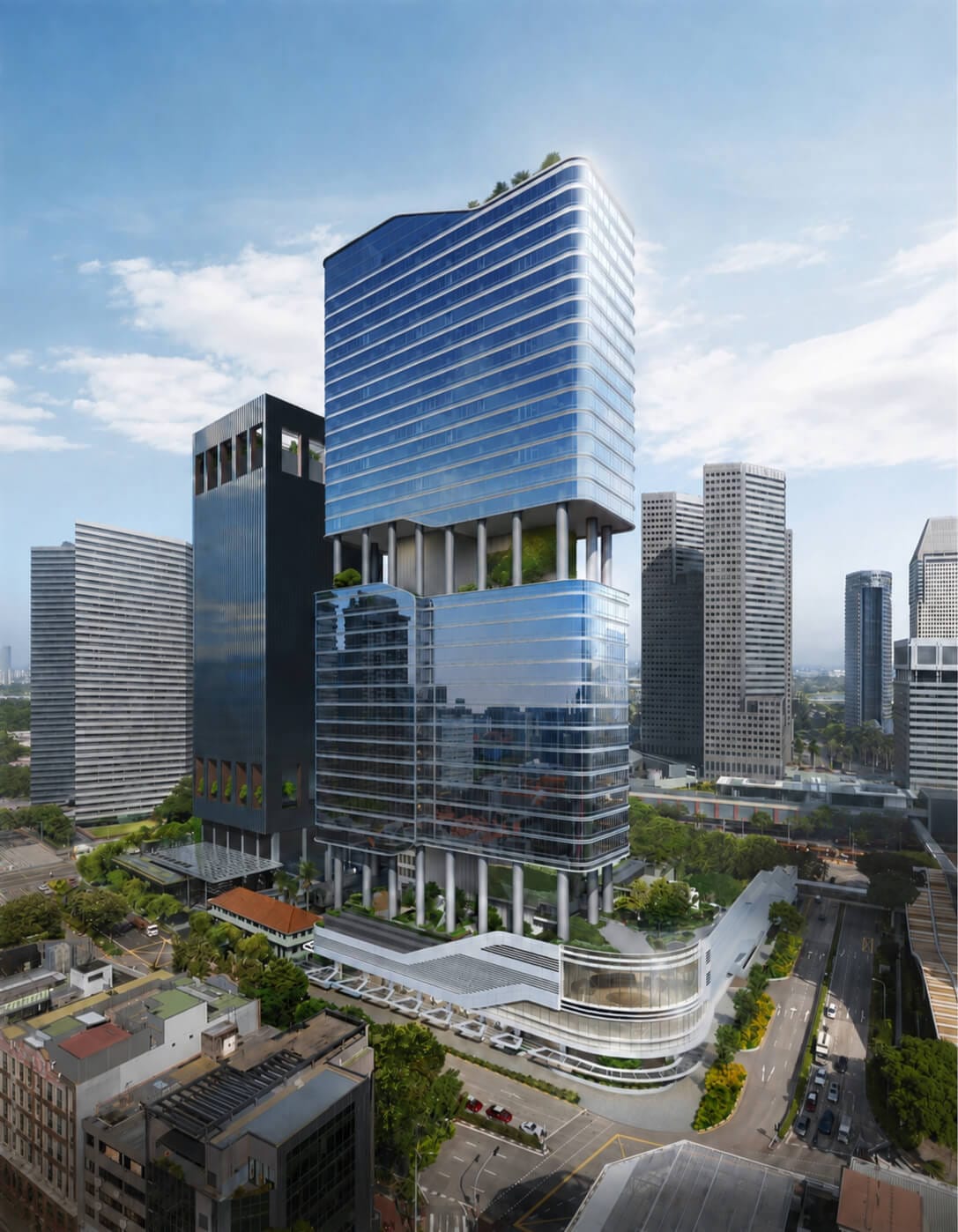 Artist’s Impression
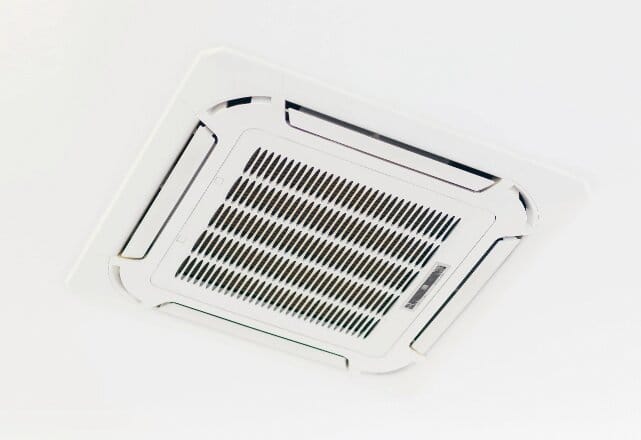
To promote good air quality, high performance filters such as MERV14 and Ultra Violet Germicidal Irradiation (UVGI) systems are provisioned within the air conditioning system. These advanced air filters go beyond standard ventilation to actively remove pollutants.
Shaw Tower’s office floors also include IAQ sensors that monitor parameters such as humidity, CO2, temperature, VOCs, and particulate matter. These sensors are supported by indoor air quality monitoring systems and controls that respond automatically to changes in air quality due to shifting occupancy levels.
With clean filtered air, workplace productivity is well supported. A 2023 meta-analysis found that increased ventilation improved task speed and reduced error rates among office workers[3].

The building’s biophilic design achieves a high green plot ratio of more than 8.0 to bring natural light and greenery into the building, through two sky terraces, rooftop gardens, and landscaped spaces.
This aligns with evidence that employees in greener environments are 6% more productive and 15% more creative[4].

Shaw Tower is designed with a side core configuration which allows for maximum exposure to natural light, ensuring that office spaces are not walled off or isolated from natural light.
All office floors and podium levels in Shaw Tower are equipped with full-height glass façade windows to maximise the wellbeing benefits of natural light across the floor plate.

Shaw Tower has achieved WELL pre-certification and is expected to attain WELL v2 Core Gold, which would make it Singapore’s first high-rise Grade A commercial building to be awarded the International WELL Building Institute (IWBI) WELL v2 Core Gold.
This certification builds on how Shaw Tower’s building features are designed to promote human health and well-being.

Shaw Tower’s end-of-trip facilities encourage healthy commuting habits, including secure indoor and outdoor bicycle parking alongside locker and shower facilities that make the commute between home and office less stressful. The full suite of amenities covers showers, lockers, and bicycle parking, with accessible lockers available to ensure all abilities are covered.
- Allen, J., MacNaughton, P., Satish, U., Santanam, S., Vallarino, J., & Spengler, J. (2015). Associations of Cognitive Function Scores with Carbon Dioxide, Ventilation, and Volatile Organic Compound Exposures in Office Workers: A Controlled Exposure Study of Green and Conventional Office Environments. https://dash.harvard.edu/entities/publication/73120379-1584-6bd4-e053-0100007fdf3b
- Nieuwenhuis, M., Knight, C., Postmes, T., & Haslam, S. A. (2014). The relative benefits of green versus lean office space: Three field experiments. Journal of Experimental Psychology Applied, 20(3), 199–214. https://doi.org/10.1037/xap0000024
- Kuramochi, H., Tsurumi, R., & Ishibashi, Y. (2023). Meta-Analysis of the effect of ventilation on intellectual productivity. International Journal of Environmental Research and Public Health, 20(8), 5576. https://doi.org/10.3390/ijerph20085576
- Interface. (2015). Human spaces: The global impact of biophilic design in the workplace. https://www.interface.com/content/dam/interfaceinc/interface/global-campaigns/human-spaces/report/global-human-spaces-report/Human%20Spaces%20report%202015%20EN.pdf